
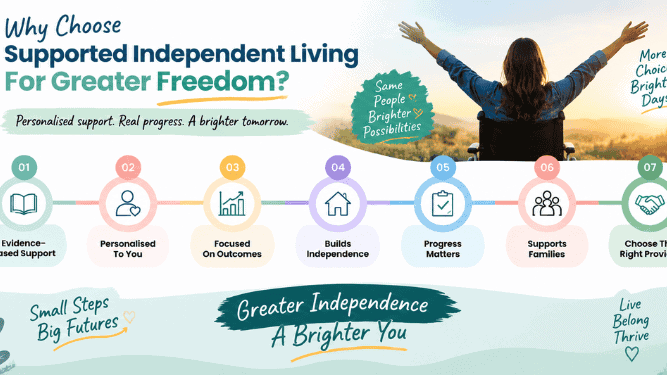
Choosing disability support that genuinely makes a difference means having services built around your individual needs, goals and everyday experiences. Evidence-based and outcome-focused disability services are important because they help ensure support is meaningful, practical and designed to create positive progress over time. As a trusted registered NDIS provider, Kharisma Care can help you understand your options, navigate the process and access personalised support, including supported independent living, that encourages confidence, choice and greater independence.
What Are Evidence-Based Disability Services?
Evidence-based disability services use trusted approaches, professional knowledge and each participant’s needs to guide support. This means support is not based on guesswork. Instead, strategies are chosen to help people build skills, improve daily living and work towards goals that matter to them.
Why Is Personalised Disability Support Important?
Every person has different abilities, preferences and goals. Personalised disability support takes these differences into account instead of using the same approach for everyone. Support can focus on daily tasks, communication, social participation, confidence or other areas that are important to the participant.
How Do Outcome-Focused Disability Services Help?
Outcome-focused support looks at what a person can achieve through their services. The goal is not simply to keep someone busy. It is about helping participants make real progress, such as learning new skills, becoming more confident, participating in their community or becoming more independent.
How Does Support Build Independence?
Good disability support should encourage people to do as much as they can for themselves. A support worker may provide guidance instead of completing every task. This approach can help participants develop confidence and practical skills while working towards supported independent living Orange and greater choice in everyday life.
Why Is Measuring Progress Important?
At Kharisma Care, regular progress reviews help identify whether support is effective. As participants build skills or experience changing needs, goals can be updated. Reviewing outcomes allows participants and support teams to refine services, improve assistance and focus on areas.
How Can Families Benefit From Outcome-Focused Support?
Families and carers often want to know that support is making a positive difference. Clear goals, regular communication and visible progress can provide greater confidence. When families understand what support is helping achieve, they can also provide better encouragement while respecting the participant’s choices and independence.
Choosing The Right NDIS Provider
When choosing a registered NDIS provider Orange, look for a team that listens to participants and understands their individual goals. Ask how progress is reviewed, how support plans are developed and how services encourage independence. The right provider should make support purposeful, respectful and centred on the person.
Final Thoughts
At Kharisma Care, evidence-based disability services create meaningful support by linking daily assistance with personal goals. Participant-focused care respects individual choices and progress while encouraging confidence, independence and community participation. With the right approach, small improvements can deliver lasting benefits.
Care Begins Here
Start accessing trusted disability support by contacting Kharisma Care at 0476878286 or [email protected] today. Our team is ready to help you achieve your goals.
People Also Ask
What Makes A Disability Service Provider Trustworthy?
A reliable NDIS disability provider should make participants feel respected, supported and involved in their own care. They should provide clear communication, listen to individual preferences and create a support experience based on trust and understanding.
How Do Disability Services Support Personal Growth?
Disability services can help individuals recognise their strengths, explore new opportunities and develop skills that support confidence and personal development. The right support can encourage people to try new things while working at their own pace.
What Role Do Support Workers Play In Achieving Personal Goals?
Support workers provide practical assistance, encouragement and guidance to help participants work towards their goals. They focus on empowering individuals while respecting their choices and allowing them to remain in control of their decisions.
How Can Disability Support Improve Quality Of Life?
The right disability support can help individuals enjoy greater confidence, stronger relationships and more opportunities to take part in activities they value. Personalised assistance can make everyday experiences more manageable and fulfilling.
What Should Participants Expect From A Quality Disability Support Service?
Participants should expect respectful care, dependable support and services that recognise their individual needs. A quality SIL provider should create a comfortable environment where people feel listened to and valued.
How Are Disability Support Services Adapted When Needs Change?
Support services can be adjusted as a person’s circumstances, preferences or goals change. Regular discussions and feedback help ensure that the support provided continues to meet the participant’s current needs.
How Does Choice And Control Influence Disability Support?
Choice and control allow participants to make decisions about their support and daily routines. This helps individuals have a stronger voice in their lives and ensures services reflect what matters most to them.
What Are The Benefits Of Skill-Building Disability Support?
Skill-building support helps participants develop abilities that can make everyday tasks easier. Over time, learning new skills can improve confidence, independence and participation in different areas of life.
How Can Disability Services Encourage Community Participation?
Disability services can support people in accessing community activities, developing social connections and taking part in experiences that match their interests, abilities and personal goals.
Why Is Communication Important Between Participants And Providers?
Good communication helps create a stronger relationship between participants and providers. It ensures concerns are addressed, expectations are clear and support continues to reflect the participant’s preferences.
What Factors Should Be Considered Before Selecting Disability Support Services?
When choosing a NDIS SIL provider, consider their approach to care, experience, reliability, communication and ability to deliver support that feels personalised and respectful.
How Can Disability Support Promote Emotional Wellbeing?
Support that encourages confidence, connection and meaningful participation can have a positive impact on emotional wellbeing. Having the right assistance can help individuals feel more comfortable and supported in everyday situations.
What Is The Difference Between Assistance And Empowerment In Disability Support?
Assistance focuses on helping with specific tasks, while empowerment focuses on encouraging confidence, decision-making and personal growth. Effective support combines both to help individuals achieve their own goals.
How Can Participants Stay Involved In Planning Their Support?
Participants can stay involved by sharing their opinions, discussing their preferences and providing feedback about what works best for them. Active involvement helps create services that truly reflect their needs.
Why Is A Person-Centred Approach Important In Disability Care?
A person-centred approach ensures support is built around the individual, their choices and their lifestyle. It recognises that everyone has different experiences, abilities and goals, making care more meaningful and effective.